School of Food Sciences and Nutrition, Department of Food Sciences and Nutrition Minako Kinuta, Lecturer Areas of specialization: Public health, preventive medicine, nutrition education
The Great Potential of Digital Technology in Health Management
Challenges in hypertension treatment that hinder continuous monitoring
The number of people with high blood pressure in Japan has reached approximately 43 million, and about one-third of them are believed to be unaware of their condition. As a result, they are not properly managing their blood pressure or receiving treatment. To obtain accurate blood pressure readings, it is essential to measure it several times a day. However, the complexity of frequent measurements and the burden of recording them make it difficult to maintain this habit, making it harder for individuals to recognize their hypertension, seek treatment, and improve their lifestyle habits.
Three findings from epidemiology research using IoT technology
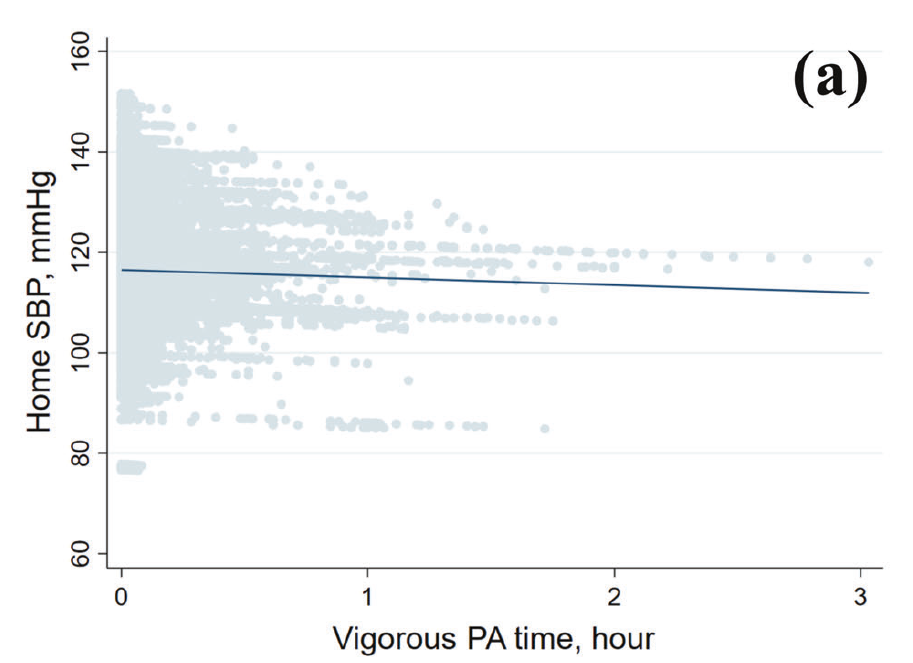
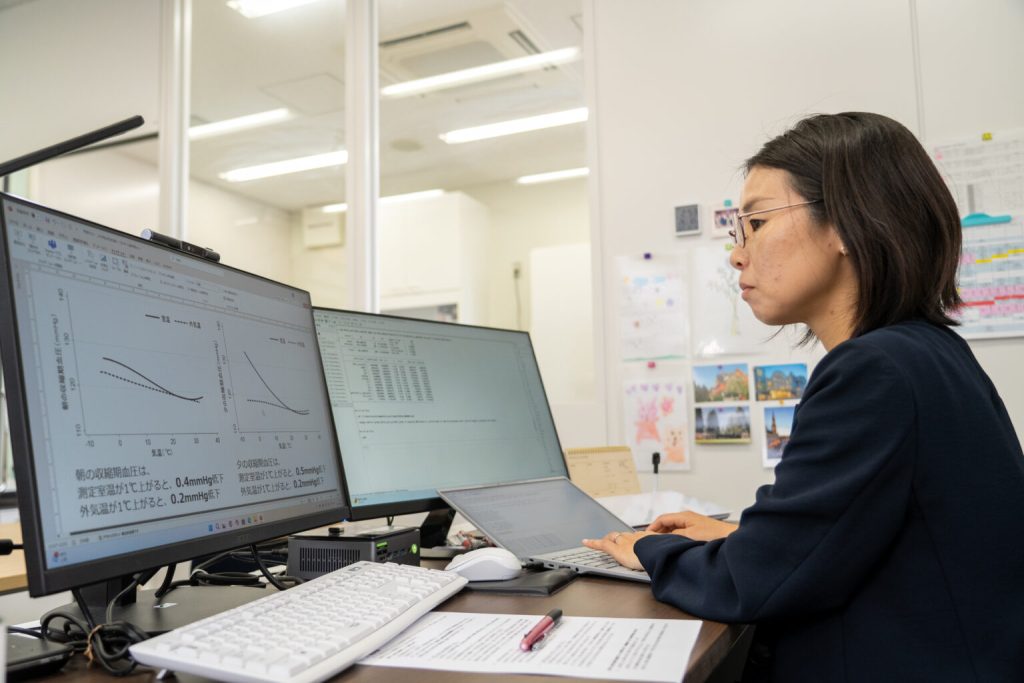
Ms. Kinuta has been conducting home blood pressure monitoring research using IoT technology in Masuda City, Shimane Prefecture since 2018. A cumulative total of approximately 850 local community residents have participated in the “Masuda Study” (as of March 2024). Currently, about 350 people have continued to measure their blood pressure for the study. Participants basically measure their blood pressure twice in the morning and twice in the evening. These measurements are automatically transmitted to the cloud server via the Internet. In addition, for participants who were interested, the number of steps taken and activity levels were also measured using an activity tracker. The cumulative number of measurements for the Masuda Study exceeds 500,000 home blood pressure readings and 250,000 measurements of steps taken and activity levels. Based on these data, Ms. Kinuta and her associates made three important findings. The first finding was the importance of room temperature management for the prevention and management of high blood pressure. In the Masuda Study, room temperature was measured and transmitted along with blood pressure readings. Analysis combining this data with outdoor temperature data from the Japan Meteorological Agency revealed that room temperature had a greater impact on blood pressure than outdoor temperature. The second finding was that participants who continuously measured their blood pressure for a year showed not only a significant decrease in blood pressure but also a decrease in estimated salt intake from urine samples. Regular blood pressure monitoring was associated with a trend toward lower salt intake, suggesting that continuous monitoring may also contribute to improvements in dietary habits. The third finding was that moderate exercise and an increase in step count were effective in lowering blood pressure, as quantitatively demonstrated in the study. Furthermore, for participants who opted in, the urinary sodium/potassium ratio was also measured, which provided particularly interesting insights. According to Ms. Kinuta, “The urinary sodium/potassium ratio varies greatly depending on the foods consumed. Even among married couples who eat the same meals, differences in sex and body size can lead to varying values. These aspects were particularly intriguing.”
As exercise time increases, home blood pressure (systolic blood pressure) tends to decrease
The significance of self-monitoring
“I have participated in various fieldwork over the years and have conducted numerous on-site investigations,” Ms. Kinuta reflects. “The Masuda Study uses digital technology to overcome distance and time constraints while also reducing the hassle of recording blood pressure, making continuous measurement possible. By monitoring their blood pressure and step count daily, participants become more aware of their own bodies. As a result, they deepen their health knowledge, which encourages self-motivated behavior change. The study reaffirmed the importance of awareness and self-monitoring. I hope to continue conducting research using digital technology and to expand this into educational media,” Ms. Kinuta comments. Currently, she is planning an intervention study on the self-monitoring of the urinary sodium/potassium ratio using an IoT device, as well as research on improving lifestyle habits for preschool children and their guardians. She is also interested in developing a new health improvement app, in collaboration with a company. Moving forward, she plans to continue generating research ideas from everyday life and exploring new approaches to health promotion.
Exploring new possibilities for healthy behavior using self-monitoring records
PROFILE
Completed the doctoral program at the Department of Social Medicine, Graduate School of Medicine, The University of Osaka. Doctor of Medicine. Registered Dietitian. Previous position: Assistant Professor, Public Health, Graduate School of Medicine, Dentistry and Pharmaceutical Sciences, Okayama University. The goal is to promote sustainable health through diet by conducting preventive medical research on high blood pressure and epidemiological studies, including dietary surveys.