Department of Social Welfare, School of Psychology and Social Welfare Professor Yuuka Ooka Areas of specialization: Mental health welfare
A “Trauma-Informed” Perspective for Healing the Mind and Society
Striving for a trauma-informed society
Specializing in mental health welfare and conducting research with the theme of “building a trauma-informed society” is Professor Yuuka Ooka. She is currently focusing on how to build a society in which people can receive the appropriate support when they are hurt. “Everyone gets hurt in life. If society is kind and forgiving, people can move on again,” she says.
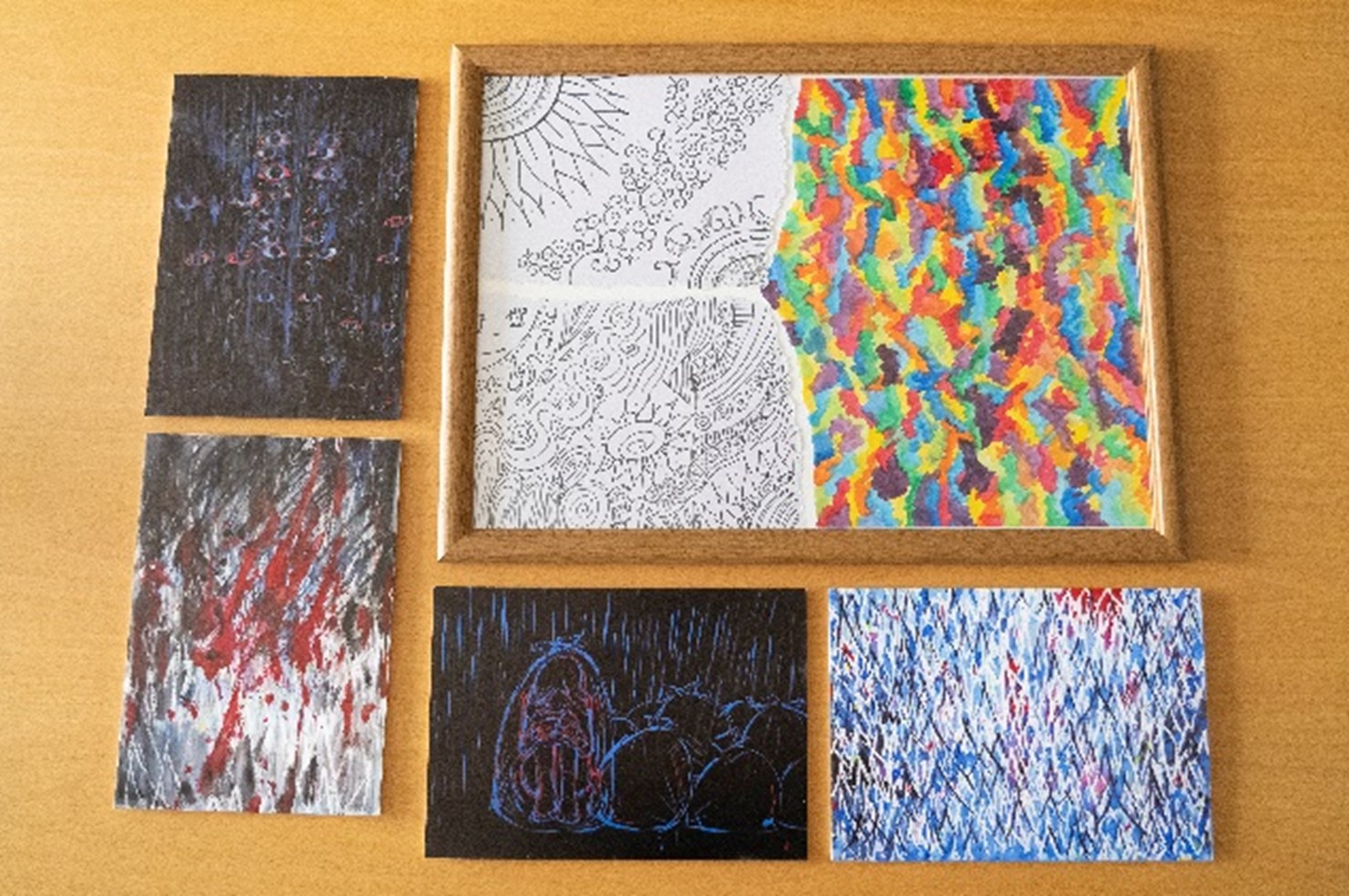
She has been involved in victim support for many years while pushing forward with her research which focuses on trauma. In recent years, she has been working on raising people’s awareness on trauma in order to strive for a society that supports victims from an “upstream,” preventive perspective (at the stage of causes). What especially stands out among her work is her approach to citizens with the use of paintings. At the “Trauma Exhibit” that was held in the past, paintings with the theme of “life” drawn by victims of traumatic experiences such as abuse, neglect, and sudden loss of a loved one, were viewed by the general public. The degree of empathy for trauma that the visitors had before and after viewing the exhibit was surveyed. The results showed that there was an increased tendency among visitors to perceive trauma as a personal, rather than distant, issue. In this way, she is working to promote understanding and foster empathy by using methods to visualize trauma.
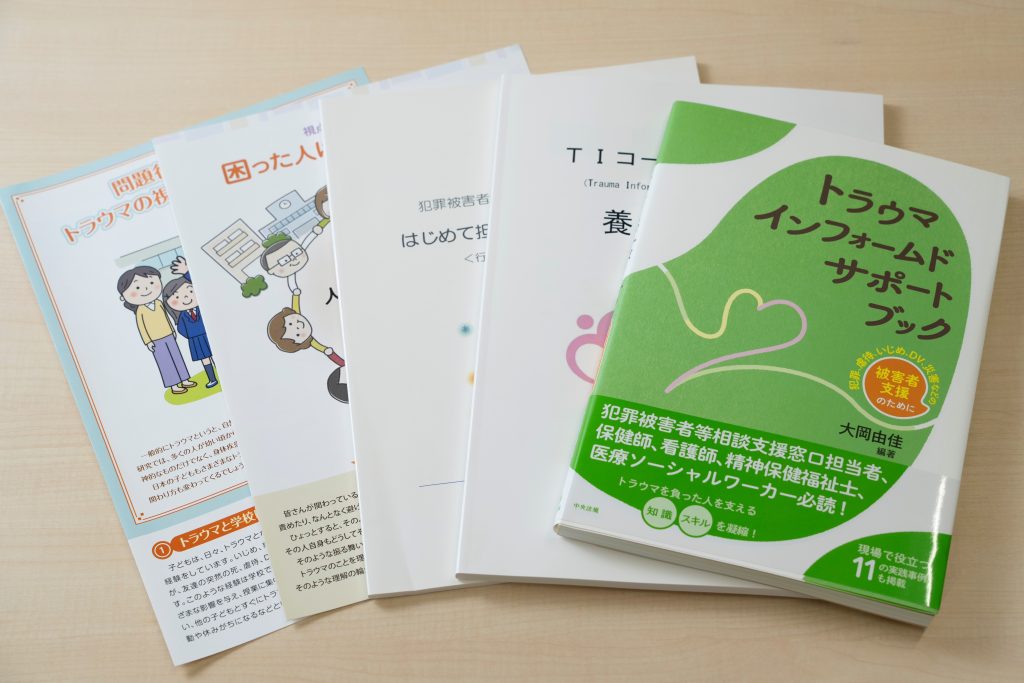
Furthermore, she is dedicated to expanding trauma education and promoting its dissemination throughout society. She has established a general incorporated association that creates educational materials for citizens which promote the understanding of trauma and also offers training for professionals via on-demand streaming. Effect verification of these efforts is also conducted. A well-balanced fusion of research and practice is a notable characteristic of her work.
From the Trauma Exhibit, paintings created based on traumatic experiences
Trauma impacts not only the mind, but also the brain and the body
When people hear the word “trauma,” it’s typically perceived as being a psychological problem. However, brain science research in recent years has discovered that trauma affects the brain’s structure and functions as well as physical health. For example, it has become clear that it’s possible that experience of abuse in early childhood may cause brain atrophy. Also, trauma may cause depression or alcoholism, it even may be a risk factor for dementia and chronic diseases.
Based on such information, Professor Ooka emphasizes that the understanding and care for trauma is a theme that everyone in society should be concerned with, not just medical and welfare professionals. “Just as elevators in train stations benefit not only their intended users but everyone, a trauma-informed society will consequently be a comfortable society for everyone to live in.” This is a concept called the “Society Model.” It is also the portion that overlaps with the basic philosophy of mental health welfare.
Giving shape to a “kind society” through both research and practice
Professor Ooka has also now taken an interest in “trauma-informed design.” It is an environmental design concept that incorporates psychological considerations in the lighting and spatial composition, and other elements. In other countries, this type of design has been applied to web design as well as to architecture for schools, hospitals, and facilities. Cooperating with architects, non-profit organizations, and medical professionals, she has started research on how to create safe and secure places and ways to measure their effectiveness.
In addition, she is working on the issue of how trauma is often passed down through generations, with a focus on single-mother households. What is especially important to her in research is “not abandoning the voices of the people concerned.” Her thoroughness in sharing her research results and providing clear, detailed explanations demonstrates her conviction as a researcher who values both ethics and practicality.
“If society changes, both victimization and perpetration should decrease.” What she strives for is a society in which people can live supporting each other despite having their own scars. This vision is backed by a quiet but powerful conviction.
Original educational materials for the general public created to promote a deeper understanding of trauma
PROFILE
After graduating from the Faculty of Sociology at Kansai University, she worked at a private psychiatric hospital before moving on to work as a mental health social worker at the Department of Neuropsychiatry at Kurume University from 2003. At the same time, she was enrolled in the Doctoral Program at Kurume University. After acquiring a doctorate (health and welfare science) in 2008, she started working as an assistant and a lecturer at the Faculty of Psychology and Welfare at Tezukayama University. In 2010, she started working at Mukogawa Women’s University where she continues to work today.