University of Wisconsin-Madison 図書館情報学研究科修了。 広島大学人間社会科学研究科博士課程後期在学中。 英語教育ユニバーサルデザイン研究学会(AUDELL)代表。 英語の読み書き困難に関する基礎研究や、日本語話者の英語学習における初期段階でのつまずきに着目した英語教育法の開発・啓蒙などに携わる。著書・DVD多数。
Kayoko Murakami Associate Professor School of Education, Department of Education Areas of specialization:English language teaching, basic English literacy, special-needs education, dyslexia
How Can English Be Taught in a Way That Supports Every Child?
Struggling with English is not simply a matter of students’ ability; the teaching methods also play a significant role
Although the importance of English proficiency has long been recognized in Japan amid increasing globalization, Japanese learners’ proficiency remains comparatively low in Asia, still trailing behind countries such as South Korea and China. Associate Professor Murakami points out that the reason for this is “Not a lack of effort by the learners, but also a problem with the system such as instruction methods and the education system.” She has been involved in basic research on the challenges faced in reading and writing English, research on the phonological awareness of native Japanese speakers, establishment and verification of effect of stepwise and systematic reading and writing instruction programs, and development and dissemination of teaching materials, etc. At the same time, since the introduction of special-needs education in 2007 and the implementation of English as a subject in elementary schools under the New Courses of Study in 2020, the gap has further widened between children for whom learning comes more easily and children who face difficulties in learning. As a result, a student significantly stumbles in the most basic area of learning English, such as being “unable to read” or “unable to write” words and sentences.
What is Dyslexia as seen in the English-speaking countries
According to Associate Professor Murakami, it is said that 10 to 15% children face challenges in reading and writing (dyslexia) in English due to its linguistic characteristics. Therefore, in English-speaking countries, phonological awareness (ability to distinguish between sounds by being aware of sounds) is strengthened from early childhood, and methods of learning have been established where children spend over 6 to 7 years in language acquisition using phonics (a learning method for mastering reading by studying the correspondence between sounds and letters [example: [k], [æ], and [t] combine to form the word “cat”]). “So, I hypothesized that there may be even more people with reading and writing difficulties among Japanese people for whom English is not their first language. Based on this hypothesis, I continue to research effective English language learning methods for Japanese speakers,” says Associate Professor Murakami.
In addition to her research, she teaches at Mukogawa Women’s University, guiding students who aspire to become teachers, particularly in providing learning support for those facing reading and writing difficulties. Furthermore, as a practitioner of individual education, she has learned that “the first step must not become a stumbling block.” She believes that if learners are given early experiences of phonics-based English learning—similar to children in English-speaking countries—they are less likely to struggle when full-scale reading and writing instruction begins in junior high school. In addition, she developed a study group with faculty members who were concerned about educational methods, and established the “Association of Universal Design for English Language Learning (AUDELL).” As president, she continues to actively present papers and hold training sessions for teachers.
Breaking words down into syllables and phonemes increases phonological awareness
Need for effective digital teaching
In the first place, many English language teachers in Japan have become teachers without experiencing the difficulties mentioned above, and therefore, most of them are worried about teaching without understanding “Why children are not capable of learning English.” In addition to learning methods in the English-speaking countries, Associate Professor Murakami aims to create digital teaching materials that incorporate phonological awareness reflecting the characteristics of native Japanese speakers. The points that native Japanese speakers tend to stumble over are already known, and guidance methods have been proposed. With digital teaching, teachers can provide guidance in areas that they cannot teach themselves, which can overcome the barriers in the way of not just students but also the teachers. Therefore, in her strong words, she said, “I want to immediately start working on creating effective teaching materials, so I am looking for partners with whom I can make digital teaching materials.” In addition, as a medium-to-long-term goal, she says strongly, “We will develop an assessment test so that English teachers can understand what the children have been able to learn and what they have not.”
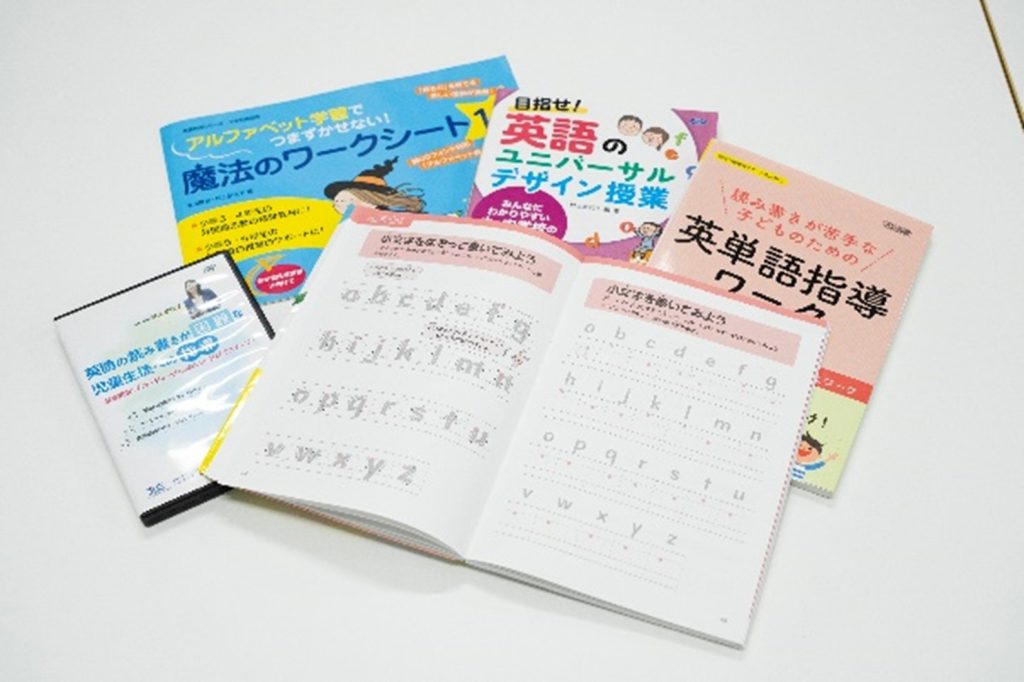
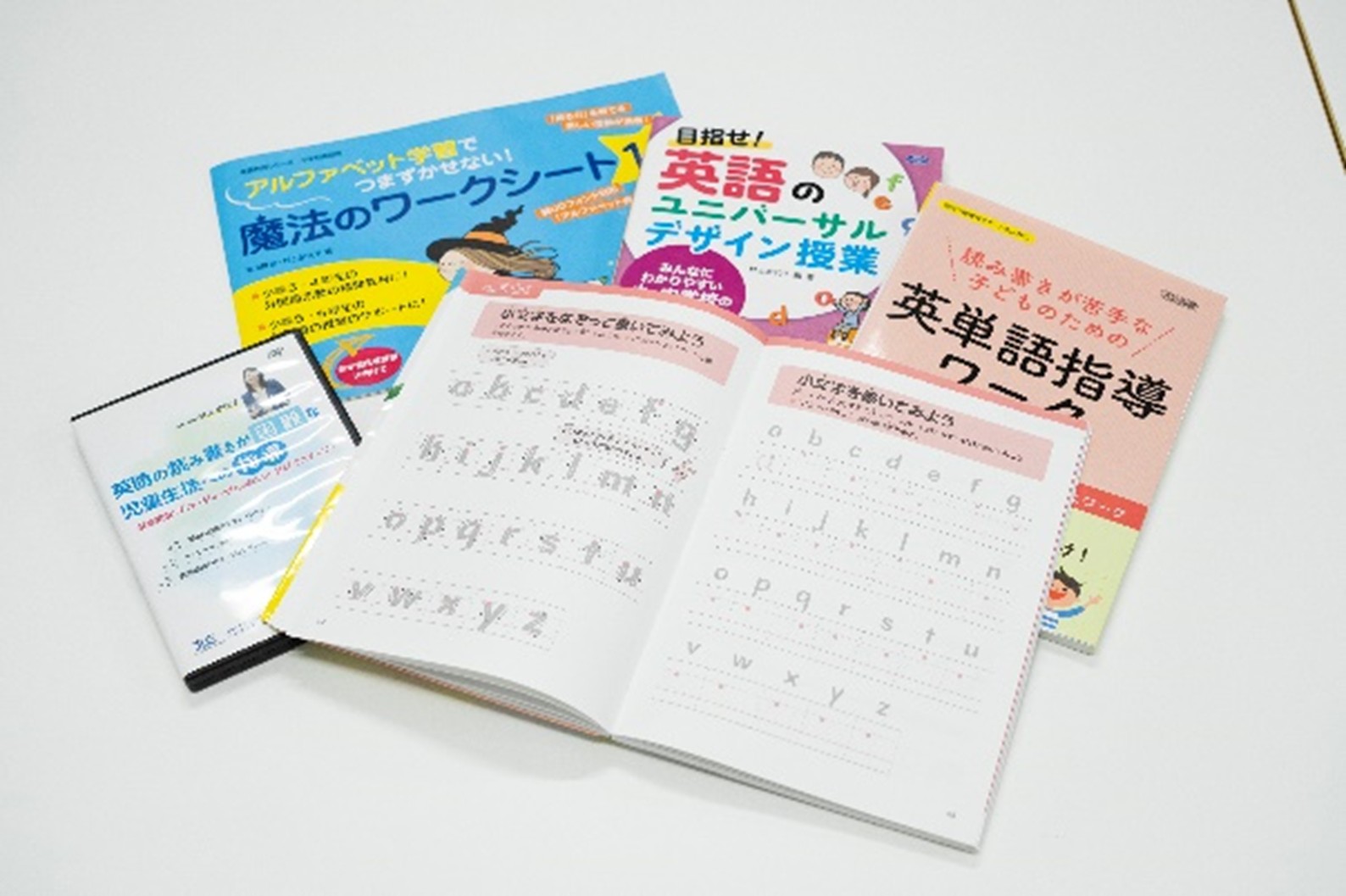
Teaching materials supervised by Associate Professor Murakami
PROFILE
Completed library and information studies research at University of Wisconsin-Madison. Currently enrolled in the Doctoral Program, Graduate School of Humanities and Social Sciences, Hiroshima University.
President of the Association of Universal Design for English Language Learning (AUDELL). She is involved in basic research on the challenges faced in reading and writing English, and development and education of English teaching methods focusing on stumbling of Japanese speakers in the early stage of English learning. Many books and DVDs.